When people feel tight or stiff, their first instinct is usually simple: stretch more. And while stretching is important, it’s only half of the solution.
At Beechmont Racquet & Fitness, we often remind members that lasting mobility and pain relief usually come from a combination of stretching and strengthening. That’s exactly why PNF stretching paired with personal training can be such a powerful approach.
Tight Muscles Often Create Weak Ones
When a muscle becomes tight, it can begin to pull your body out of alignment. When this happens, the muscles on the opposite side of the body often become lengthened and weak, because they can’t fully contract the way they’re supposed to.
This imbalance can create a cycle where:
- Tight muscles keep pulling the body out of alignment
- Opposing muscles become weaker
- Movement becomes less efficient and sometimes uncomfortable
That’s why simply stretching the tight area isn’t always enough. The weaker muscles need strengthening to restore balance.
A Common Example: Sitting and Anterior Pelvic Tilt
A great example of this happens with the way many of us spend our days — sitting. When we sit for long periods of time:
- The hip flexors in the front of the hips shorten
- The lower back becomes overly arched
- The pelvis tilts forward
This position is known as an anterior pelvic tilt, resulting in tight hip flexors, lower back tightness, weak glutes, and weak abdominal muscles.
Many people try to solve this by only stretching their hips or lower back. While that can help temporarily, it doesn’t fully correct the imbalance.
To restore better alignment, we also need to strengthen the glutes and abdominal muscles
As those muscles strengthen, they help bring the pelvis back toward a more neutral position, reducing tension and improving movement.
Why PNF Stretching and Personal Training Work So Well Together
This is exactly why PNF stretching and personal training make such an effective combination.
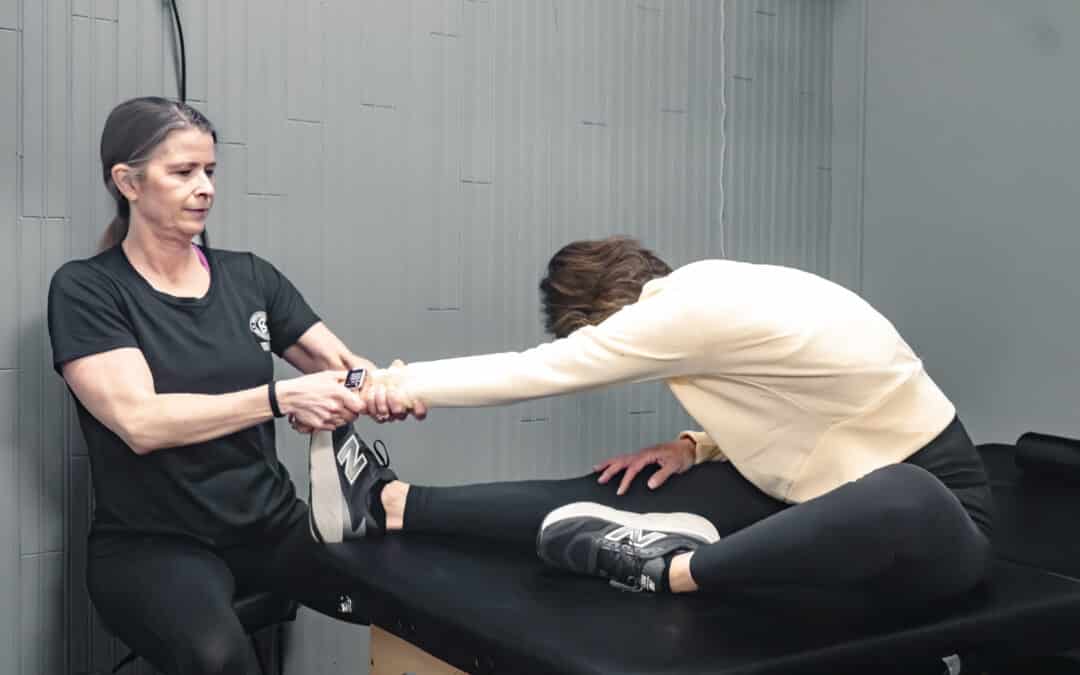
PNF (Proprioceptive Neuromuscular Facilitation) stretching is more than just a deep stretch—it’s a sophisticated conversation between your muscles and your nervous system. By contracting a muscle while it’s in a lengthened state, you are essentially “strengthening” it at its weakest point.
When you pair this advanced stretching with personal training, you’re able to:
- Override the “Tightness” Reflex: PNF uses targeted contractions to trick the nervous system into allowing a deeper, safer range of motion.
- Bridge the Gap: Use PNF to “unlock” a range of motion, then immediately use personal training to “lock it in” with strength.
- Restore Alignment: Strengthen the weak, dormant muscles (like the glutes) that have been let off the hook by your tight muscles.
- Build Lasting Patterns: Create movement habits that prevent the tightness from returning the moment you leave the gym.
It’s not just about becoming more flexible—it’s about teaching your body how to own and control its movement long-term.
Try These Hip Flexor Stretches
Because tight hip flexors are so common, our personal trainer, Kim Boardman, created a video demonstrating hip flexor stretches you can add to your routine.
If you spend a lot of time sitting, these stretches can be a great place to start — especially when combined with strengthening work for your core and glutes.
Watch the video below to learn how to open up the hips and start restoring better alignment.
Ready to work on your strength and alignment? Contact tammy@beechmontfitness.com to get started today.